
What is Dominican Amber? Age, Origin, and Characteristics

Updated: Feb 4
What is Dominican Amber?
Dominican amber contains, arguably, the best insect inclusions in the world. As well as blue amber, this deposit is one of the highest quality for fossil hunters.


Dominican amber originates exclusively from the Caribbean Island of the Dominican Republic. It is dated to be 16-20 million years old, from the Middle Miocene Era. It is renowned for its exceptional clarity and the presence of large, clear insect inclusions.

It was produced by the now extinct Hymenaea Protera tree, called "Algarrobo." It is the extinct ancestor to the modern Hymenaea tree, pictured below. It was a flowering tree, which means its flowers are sometimes found in the amber itself. This tree exuded far more pitch than most trees, making it an excellent source of amber. This same tree produced Mexican amber and Indonesian amber.

Dominican Amber Mines
Amber mining in the Dominican Republic is conducted manually in private mines. Numerous small mines are worked by hand. Amber miners enter the mines equipped with a headlamp, a railroad spike, and a hammer. They chisel away at the earth until raw amber pieces are discovered and collected.

Dominican Amber Workshops
Dominican amber polishers go through lots of raw pieces in search of valuable insect fossils, or colorful blue amber.

Insects in Dominican Amber
Dominican amber insect inclusions are considered among the best amber fossils on Earth. The Dominican Republic consistently produces the largest and clearest insects in amber of any deposit on Earth.

Because Dominican amber comes from an island, it presents a unique case in insect fossils. Biological island communities represent ideal systems for investigating patterns and processes in evolutionary ecology. Significant species losses and extinction, as well as some species displaying remarkable status over time, have been discovered through Dominican amber fossils.

Here are some examples of Dominican amber inclusions that showcase why it is so exalted in the world of amber collectors.


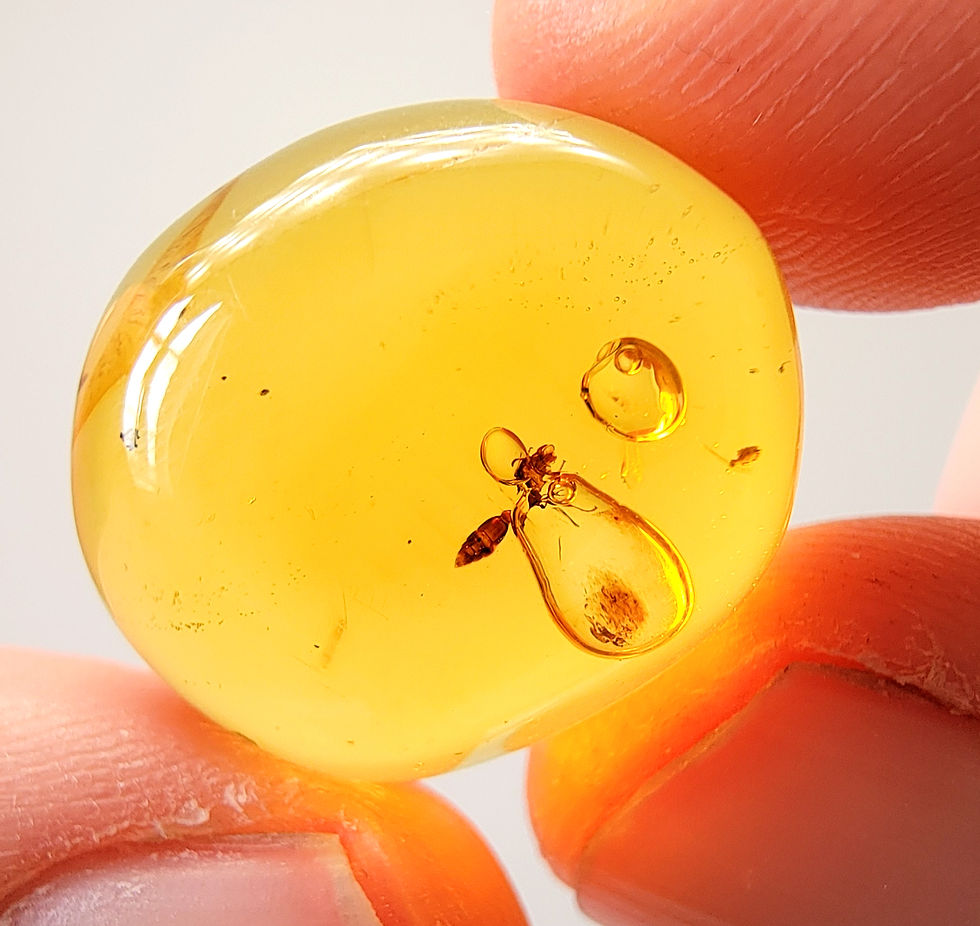
Rare Dominican Amber Colors
Dominican amber tends to be found in large raw pieces, which are usually clear and yellow. More rare colors like blues and reds can be found here as well. The fact that such large colorful pieces are found here makes Dominican great for colorful amber.


Blue Dominican Amber
The Dominican Republic is the source of the world-famous amber, blue amber. The top-quality blue amber can fetch prices higher than gold. Blue Dominican amber is the result of black smoke from forest fires settling into yellow tree pitch, resulting in blue hue. Blue amber tells us the story of massive prehistoric forest fires. Other deposits can produce blue colors, but Dominican is the best of them all.

Learn more about Blue Dominican Amber Here Dwindling Supplies, Rising Prices
Currently, Dominican amber with insect fossils are becoming scarce, because the high cost of mining makes it difficult for profitable operations. Remember that the miners' job is somewhat of a gamble, so if they do not find amber with insects or good blue colors, they might lose money on the mining operation and close the mine. This is a common occurance, and these conditions leading to dwindling supplies and rapidly rising prices.
Thanks for reading this blog! Buy Dominican Amber here:

Read about other Amber deposits:


Comments