
How do insects get trapped in Amber?

Updated: Feb 6
How do bugs get stuck in Amber?
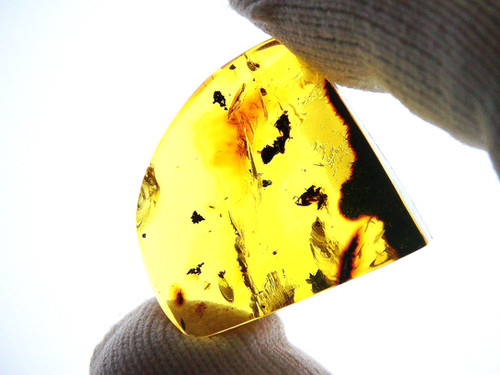
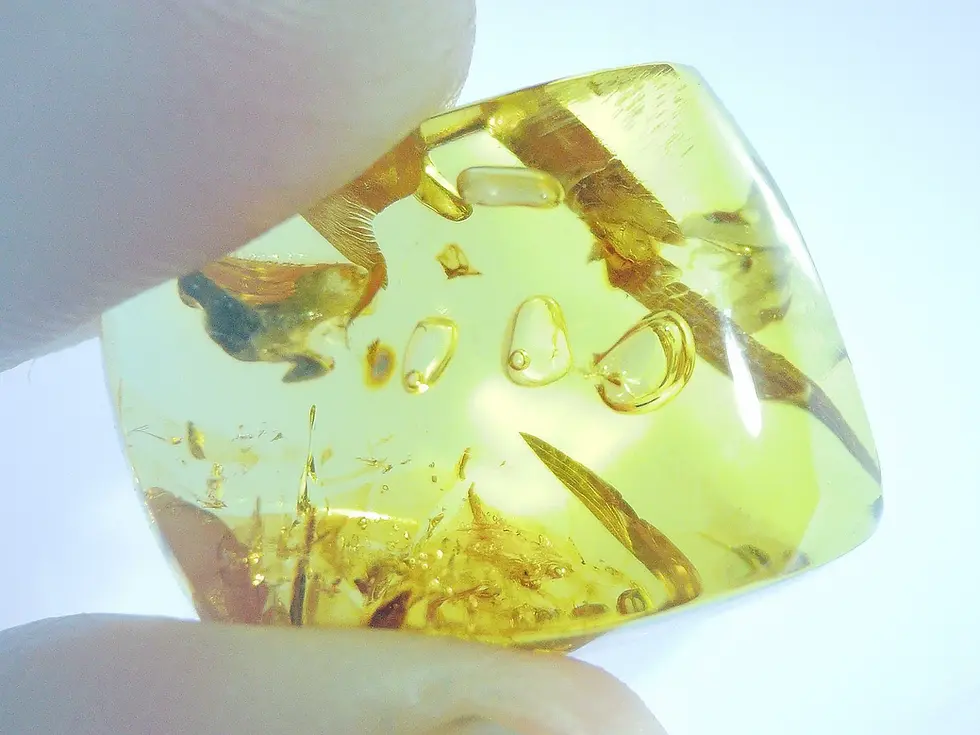
Bugs can get stuck in amber in many ways. They all involve the bugs being near a tree, which has a sticky sap on it called "pitch." This is what fossilizes into amber. Anything that lands on that sap is likely to get stuck. For example, flies may swarm around a dead dinosaur, and accidentally get stuck on the sap.

Spiders may drop down and land feet-first onto a sticky resin they cannot escape. A pocket of sticky resin can burst out form inside a tree and envelope an unsuspecting lizard in one sudden burst. A feather may fall from the sky, landing gently onto a flow of sticky resin. The resin may roll over a leaf and capture it. Bugs and pieces of the forest can get trapped in amber in an infinitum of ways. Each different situation is seen in the amber we collect and sell here at amberbugs.com
1) Flies in amber
Flies are the most common insects in amber. Flies represent about half of all the insects found in amber. They are ever present in forest and jungles. They are attracted to the sweet smelling pitch excluded from trees. When they land on it, they get stuck. Sometimes large swarms of flies can all get stuck to amber like fly paper. As more amber flows over them, they get stuck in layers. Because flies are social species, we find them in large numbers in amber. Diptera flies are the most common insects in amber across all types of amber found. See which flies we have available here, and see our AAA flies available here.
Flies in Amber Fly with intact wings in Amber Zoomed Image of Two flies in Amber Flies in Burmese Amber Display of Fly with intact wings in Amber Flies in AAA Burmese Amber Swarm in Amber
2) Spiders in amber
Spiders are less common in Amber. They are solitary creatures and exist in fewer numbers than flies. They get stuck in Amber as they crawl up or down trees. Often, spiders land in amber when descending from a strand of web. They get stuck standing, and then as more resin flows over them, they get stuck in great positioning. Spiderwebs are found in Amber because they tend to accumulate on trees. Spiderwebs can hold the spider's food, egg sacs, or other clues to its life in them. Some specimens have even captured egg sacs erupting swarms of newborn spiders, which all crawled directly into the fresh amber and got stuck by the hundreds.
Spider inclusion in silver amber ring Spider inclusion in Burmese Amber Complete display of spider in Amber Silver Ring Zoomed Image of Spider and mosquito inclusion in amber Spider and mosquito inclusion in amber Rare Spider with its food inclusion in Amber
3) Mosquitoes in amber
Mosquitoes are flying creatures present in large numbers in swampy forests, so they can easily get stuck in Amber. But they are less common than flies because they are not attracted to the resin sweet scent, they are attracted to animals. They tend to indicate swampy conditions created the amber deposit. See what mosquitoes we have available here, and see what AAA mosquitoes we have available here.
Mosquitoes and Spider in Amber Intact Mosquito inclusion in Amber Mosquito inclusion in silver amber ring Zoomed image of Mosquito in Amber Mosquito inclusion in Burmese Amber Display of Mosquito in Amber Mosquito and other insects inclusions in Amber Mosquito and some rare bugs in Amber Complete Mosquito ring in Amber
4) Roaches in amber
Roaches are very common in amber and our easily caught because they crawl on trees. Roaches are generally less desired in amber than other insects, probably due to humans natural aversion to them. Collectors don’t seem to buy much roaches. For that reason, we discount them heavily when we find them in amber. If you want a large clear insect that's affordable, search for roaches on our site. these will consistently be the most affordable specimens, along with beetles. See what roaches we have available here, and see what AAA roaches we have available here.
Roaches and some unknown particle in Amber Roach at the edge of the Amber Complete Roach inclusion in Amber Zoomed Image of Roach in Amber Roach in Burmese Amber Display of Complete Roach in Amber
5) Scorpions in amber
Scorpions are one of the rarest and most valuable insects in amber. They exist in small numbers so they do not get caught frequently. They are very large and tend to preserve well thanks to their chitinous shells. Scorpions frequently command the highest prices of all insect and amber due to their rarity and majesty. see what scorpions we have available here, and see what AAA specimens we have available here.
Group of Scorpions in Amber Scorpion attacking bug inclusion in Amber Scorpion and some sticks inclusions in Amber Scorpion and flying insect in Amber Display of Scorpion in Burmese Amber Intact Scorpion in Amber
6) Crane Flies in amber
Also known as mosquito eaters or mosquito hawks. This bug was famously used in Jurassic Park. Their legs detach easily and are quite common in amber. But a whole crane fly is more rare. Because of its place in Jurassic Park, crane flies in AAA specimens are highly sought after. The holy grail of collectors would be a large crane fly in an egg shaped amber. See what crane flies we have available here, see what AAA specimens we have available here.
Mosquitoes eater in Amber Pendant Zoomed image of Crane fly in Amber Pendant Mosquitoes eater and some unknown bugs in Amber Rare Single Mosquitoes eater in Amber Zoomed Image of Mosquitoes eater in Burmese Amber
7) Pseudoscorpions in amber
Pseudoscorpions are a little more common than regular scorpions, because of their size and numbers. Pseudoscorpions are one of the prettiest bugs to get caught in amber. They seem to preserve well in amber. Probably because they are very small and have hard shells. See what specimens we have available here, and see what AAA specimens we have available here.

8) Ants in amber
Ants are quite common in amber. They can also be some of the most interesting species because they are very active social creatures and often displayed and behavior such as carrying eggs, carrying food, fighting, or extinct ant species that no longer exist such as the Hell ant. See what species we have available here, and see what AAA specimens we have available here.
Ant Inclusion in Amber Ant and some small bugs in Amber Zoomed Image of Ant in Amber Display of Ant in Burmese Amber Rare Single Ant inclusion in Amber under a flashlight Display of Ant and some flies in Amber Ant and other bugs in 925 silver Amber Pendant
9) Termites in amber
Termites are one of the most frequent species in amber. Because of their food cycle, they eat trees and the trees produce amber in order to stop the termites. Termites are almost one of the main sources of trees producing amber, due to insect pressure. Therefore, when they bore a hole in a tree, the resin gets released to protect the tree, and the termite gets encapsulated quite nicely. Also during mating season they fly in huge swarms and land carelessly with little ability to walk, so they easily get stuck on fresh resin. For this reason, amber has a lot of good termite fossils. See what pieces we have available here, and what AAA specimens we have available here.
Termite and bugs in Amber Termite and wing of unknown insect in Amber Termite with some other bugs in Burmese Amber three Rare Termites in Amber Under a Flashlight rare three Termites in Amber
10) Dinosaurs, Lizards, and Geckos in amber
Dinosaurs, lizards, and geckos are not insects but vertebrates, and are extremely rare in amber. They usually have the strength to escape Amber so they don’t get stuck in it easily, they can only get stuck in certain conditions. Such as if the Amber suddenly bursts over and unsuspecting lizard, or if a wet globe falls directly on a lizard’s head and suffocates it. A hatchling may emerge out of it's egg still to weak to support itself, and fall onto the resin and get stuck. See what lizard we have available here, and which AAA specimens, we have available here.
Lizard Foot in Amber Half leg of some unknown lizard in amber
11) Feathers in amber
Feathers are one of the rarest and most valuable inclusions in amber. The highest amount of feathers are found in burmese amber. Burmese amber is from the time of the dinosaurs, so therefore the feathers could be organic soft tissue fossils from real dinosaurs. This is a constant case of Study. Feathers can fall from the sky and fall in amber, or a feathered creature may rub against fresh amber resin and the feathers get stuck. See what feathers we have available here, and see what AAA’s specimens we have available here.
Feather and a flying insect in Amber Feather and some dust particles in Amber Rare Clear Feather in Amber Feather and foot in Amber Feather and some bugs in Amber Clear Feather in Red Amber Under a light Clear Feather in Red Amber Rare inclusion of Feather with some bones of an insect in Amber
More to buy and study and check out



Comments