
What is Burmese Amber? Origin, Age, and Characteristics

Updated: Feb 4
What is Burmese Amber?
Burmese amber from the country of Myanmar, formerly known as Burma. It is the world's oldest large amber deposit, containing amber from 100 Million Years ago. And a lot of it. The dinosaurs were alive at the time of this amber's creation, which is important. We could find dinsoaur parts in this amber.

How old is burmese amber?
Burmese amber is estimated to be 66- 99 million years old, placing it in the time of the mid-Cretaceous period. This makes it a remarkable amber deposit that holds insects from the time of the dinosaurs, including the potential for fossilized pieces of dinosaurs themselves such as feathers.

Burmese amber is dinosaur aged amber
The concept for Jurassic Park was inspired by this fact, as well as numerous legitimate attempts in the real world to extract DNA from amber. However, it should be noted that in the movie, the Dominican Republic was used as the location for the amber mines, while in reality, Dominican amber is much younger and does not contain dinosaur fossils. Only Burmese amber does.

Myanmar Amber Mines
Burmese amber mines go straight down, because the amber is very deep in this deposit. That means miners have to be attached to a cable that lowers them deep into the earth. The mines are hot, humid, and full of insects. Mining is difficult but large amounts of amber are found here.


Unique Fossils in Burmese Amber
Myanmar amber is particularly valuable to science due to the insect fossils from the dinosaur age. These fossils can include species that are now extinct. In some cases, these fossils may be the sole existing evidence of certain species, making them extremely rare additions to our fossil record. In other words, a piece of amber with an extinct insect may be the only existing body of that insect on the planet. For science, this is invaluable.

Insects in Burmese Amber
Burma produces an abundance of insect fossils of all quality levels. Scientists and collectors alike go to Myanmar to try to find the rarest of all fossils. Some of the best insects in amber can be found here, including a very famous piece with a bird's foot in it!
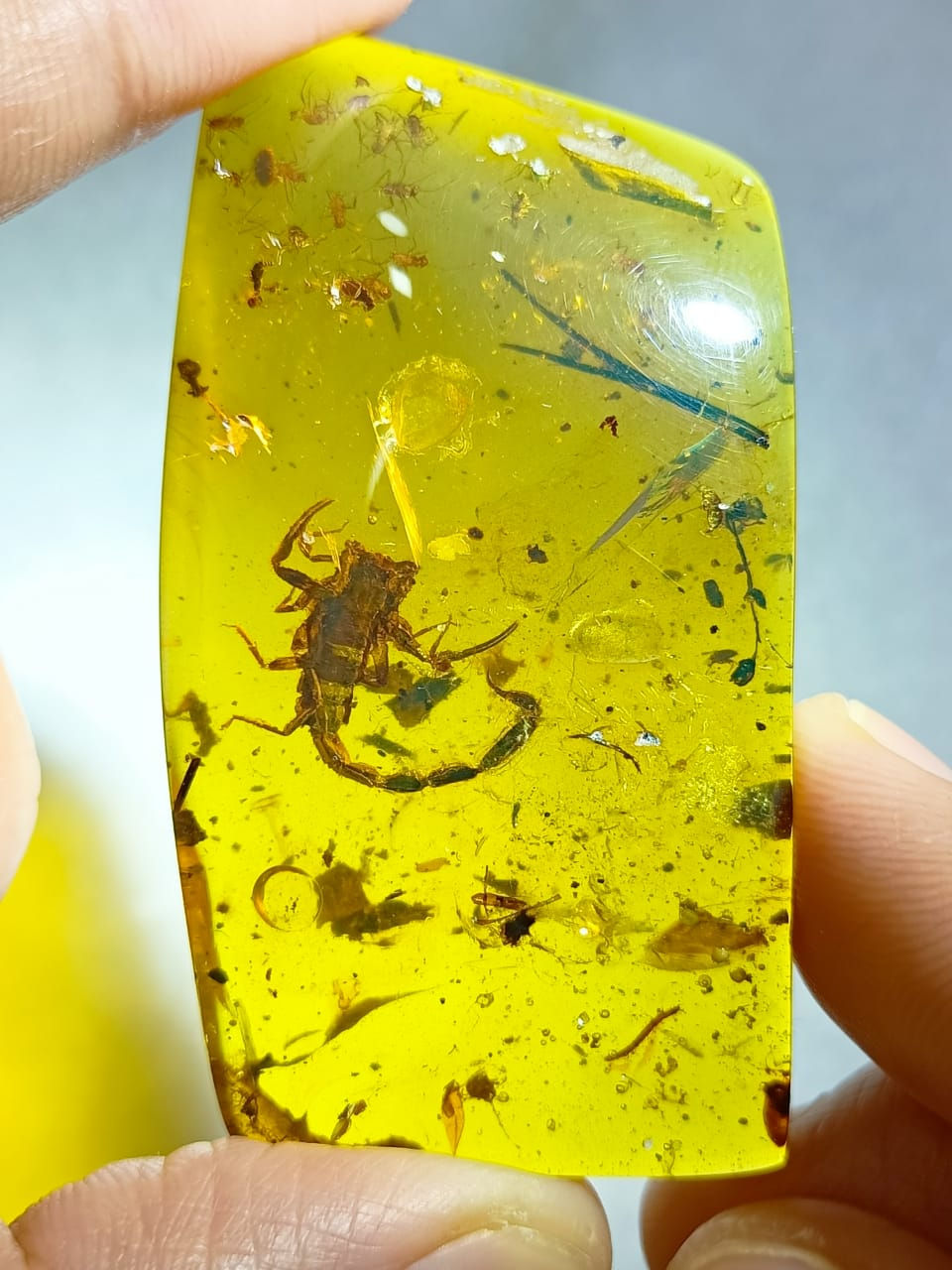
Here are some examples of Myanmar amber inclusions that showcase why it is so thrilling for the world of scientists and amber collectors.
Insect with wings in Burmese Amber Unknown Intact Insect inclusion in Burmese Amber A Spider in Burmese Amber Spider in Burmese Amber Spider in Burmese Amber Intact Rare scorpion Inclusion in Burmese Amber Intact Rare scorpion with some twigs inclusion in Burmese Amber
A Rare Reptile Inside a Burmese Amber A Spider attacking a fly in Burmese amber A Group of Burmese Amber Flying Insect in Burmese Amber A Unknown Insect inclusion in Burmese Amber Nice Feather Inclusion in Burmese Amber insect in Burmese amber
Rare Burmese Amber Colors
While this deposit is more famous for its insect inclusions than its colors, it does boast some fascinating hues. For example root amber, affectionately known as coffee amber, can look like milk swirling into a cup of black coffee.

Like all amber deposits, Myanmar produces a lot of yellow amber. What is unique to Myanmar is it frequently has a smokey, swirly character to it. This is very beautiful, and common. A piece like the one pictured below would be an exemplary piece for a collector. Some Indonesian ambers can look similar to this, but Myanmar amber will be clearer and harder.
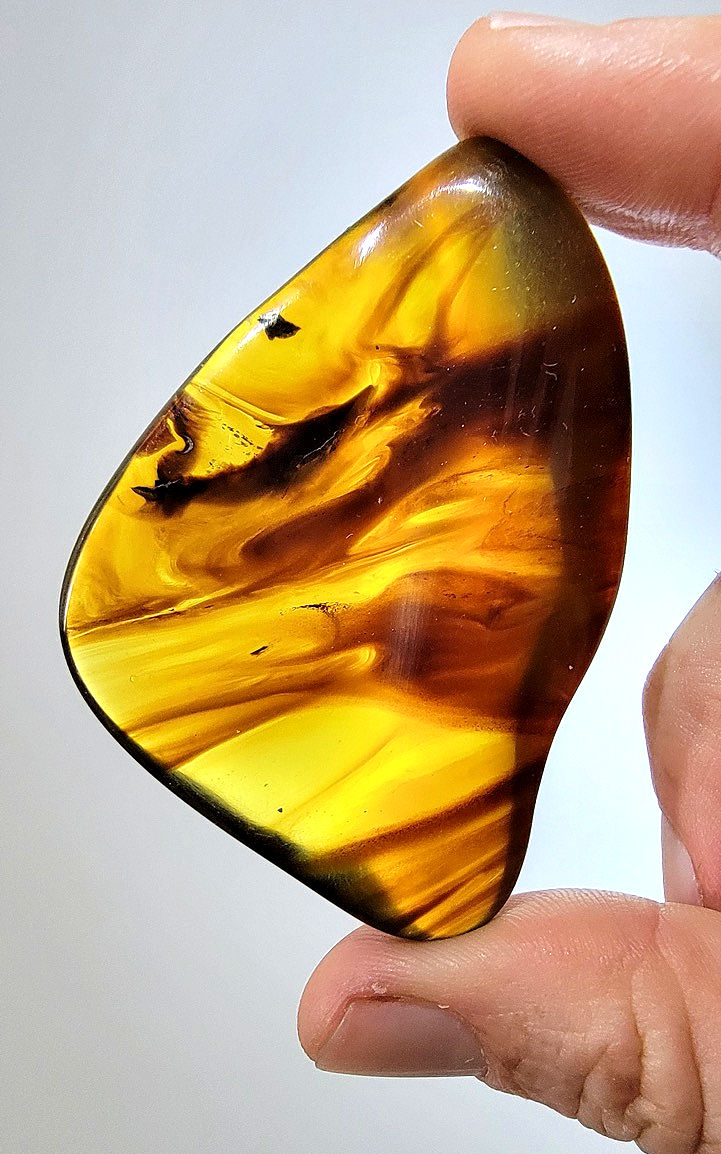
Root or coffee amber is the most sought after of all Myanmar amber colors. Its characteristics are unmistakable, and no other deposit on earth produces a similar color. Less than 1% of all amber in Myanmar is coffee colored. Very rare and highly sought after by collectors.


Blue Myanmar amber is somewhat of a mystery. Sometimes, it can display some blue colors when toplit. It does not have the same brilliance of Dominican or Indonesian blues. The odd thing about this color is that it is beautiful, yet not sought after by collectors, or considered rare. It does not seem to be included in the discussion of Myanmar amber colors. Could this be the next big thing in the amber world?

The Good, The Bad, and The Ugly
The Good: Myanmar produces a large amount of amber each year, with abundant insect fossils from the dinosaur age. These fossils can be any range of quality, including amazing museum grade pieces.
The Bad: Low grade Myanmar insects are often sold for extremely expensive online. Or they are labeled as Dominican amber and sold for much higher, due to Dominican amber’s scarcity.
The Ugly: Some Myanmar amber mines may be involved in war, and can fuel political groups. It is important to know that families and local peoples also mine and sell amber, and therefore the sales may also go to feeding families and supporting communities.
More About Amber:


Buy Burmese amber here:


Comments