
What is Amber?

Updated: Feb 7
What is Amber?
Amber is a unique gemstone formed by ancient trees. Ancient and modern trees alike produce globs of sticky resin, which capture material from the forest within it. If these resins are preserved underground in good conditions, it can essentially last for millions of years until we dig it up, polish it, and search it for it's secrets.


How is amber formed?
Amber has an incredible origin story! Millions of years ago, trees produced a sticky substance called pitch (like the stuff you see on cherry trees). Pitch is thicker than sap, and any unlucky insect that landed on it got stuck forever. Buried deep underground for millions of years, this pitch hardened and transformed into the beautiful amber we treasure today!

Where is amber found?
There are 5 Major amber deposits in the world, and numerous small deposits. The major deposits are what we are interested with because we are able to buy and search through large amounts of material, and offer them fore sale here on amberbugs.com
The 5 deposits are: The Baltic, Burma, Dominican Republic, Mexico, and Indonesia. Each deposit produces a unique type of amber.
How is amber processed?
Amber first comes out of the ground in it's raw form. It is mined by hand, or by machine. When it is raw it has a thick skin that needs to be removed before we can see the clear amber inside. First the amber miners wash the dirt off, then they can examine the amber with a flashlight to see if there may be any valuable inclusions inside. Then, by carefully polishing the amber with sandpaper and they can reveal the inclusions inside.


What do we find in amber?
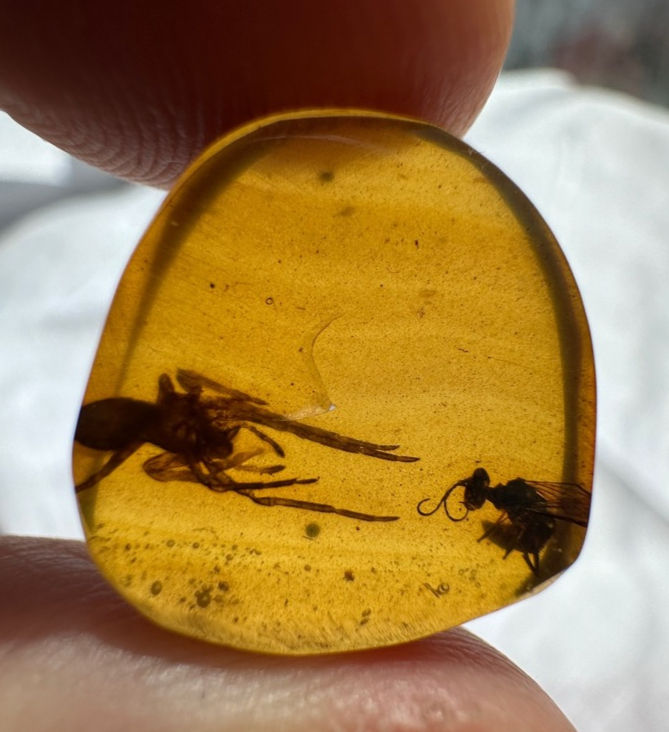
Polishing amber unlocks its hidden wonders! It can reveal trapped insects like the photos below. Some amber pieces might have colors that shift mysteriously, while others hold perfectly preserved plant life. But you won't know what lies beneath the surface until you polish it – it could be a dazzling gem, a simple piece, or something in between!

How old is amber?
Each Amber deposit holds material of a certain age. So the Oldest (and most scientifically interesting) amber is Burmese amber, dated back to 100 Million years old which is the time of the dinosaurs. Next is Baltic Amber, dated back to 48 Million years old. Then next come Mexican amber, dated to 28 Million years old. And the two youngest types of amber are Dominican and Indonesian, both 20 Million years old.
What colors does amber come in?
Most amber is clear and yellow, but each deposit has it's own set of rare colors. For example, Burma amber can produce rich red and Coffee colors. The Baltic can produce rare white and butterscotch colors. Mexico can produce rich green and red colors. Dominican amber can produced rich blue and red ambers. Indonesia can produce very rich blues and reds.


Every amber starts off it's life as a sticky glob of resin on the side of a tree. At that time, any small insect that lands on it can get stuck. After it is stuck, more resin may flow out of the tree which covers the insect completely and seals it forever. Other things can get trapped in these resins as well, for example feathers falling from birds. Also, the resins can build up inside of a tree and burst out suddenly. In this case, it can capture larger animals like lizards or geckos or birds.

Can amber preserve DNA?
Amber preserves the animals tissues inside of it better than any other material on earth. But is that good enough to preserve DNA? The answer is, sort-of. DNA does get preserved inside of amber, and scientists have extracted it before. The problem is that the DNA is damaged, and therefore cannot be used to grow a new dinosaur. Think of it like a puzzle, where most of the pieces are damaged. There is hope that advancing technology in the future will be able to work with the still usable fragments of DNA that exist in amber.
How can you tell is amber is real?
There are tests you can do to see if your amber is real or fake. Don't get scammed by buying fake plastic amber! Learn how to avoid fake amber and buy real amber online.

What does amber feel like?
Amber feels lightweight and warm. Most people pick up amber for the first time and say "Wow, it's so light! I thought it would have been heavier." That is because you are expecting to weigh similar to a rock, but it is much lighter. It will also be warm to the touch. Touch a piece of amber, and touch a piece of glass or stone in the same room. The amber will be warmer.
Does amber have a smell?
Amber has a slight smell, when heated up. You can rub it vigorously with your thumb until it gets warm and smell it. You can also hold a flame up to it for 1 second and then smell the piece. Careful not to burn it. Now there are a lot of amber fragrances out there. Know that none of them use real amber as an ingredient in those perfumes.
Is amber valuable?
Some amber is extremely valuable, especially when concerning rare insect inclusions or large AAA pieces. Rare insects in amber can easily fetch $5,000 a piece or more. Some other amber is not so valubale, such as small pieces with no insects or interesting inclusions inside. A small, dull colored piece may only cost $10 or less.
What is amber used for?
Amber fossils are important for science to be able to construct the evolutionary lineages of many insect species. It has also revealed insects that are extinct today and bizarrely different to anything living now. Amber also has a long history as a valuable jewelry item. Some cultures even use it as medicine, ingredients for recipes (such as amber wine), and more. Personal collectors are also a strong force in the amber market.

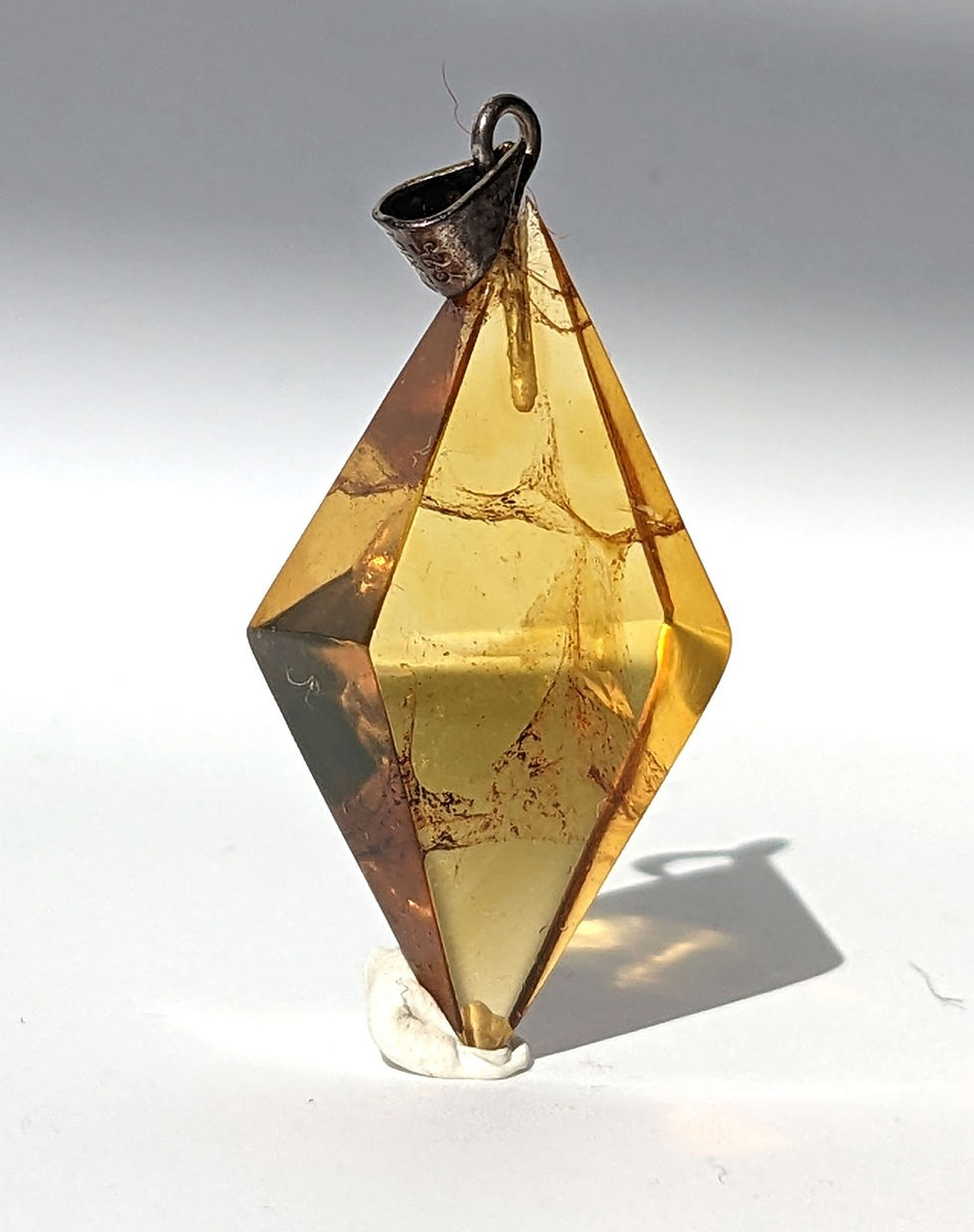


Amber is considered to be "fossilized sunshine," Which means it has the same properties as a sunny day. Warm, relaxing, calming. Protective.
More About Amber:


Comments