
Amber Encyclopedia Entry #10: Dominican Amber Wasp with Enhydro Bubbles

Updated: Aug 7, 2025
This Dominican amber specimen contains a fossilized wasp and two enhydro bubbles — sealed in golden resin for over 15 million years. A striking combination of insect and fluid inclusion, this piece showcases the beauty and scientific value of Miocene-era amber.
Dominican amber is famous for its clarity, vibrant fluorescence, and natural inclusions — but this piece brings two rare features together: a fossilized wasp and multiple enhydro bubbles, preserved side by side.
This polished specimen from the Miocene epoch, estimated at 15 to 20 million years old, captures both ancient life and ancient water in one piece of natural time capsule. It is a museum-grade example of how Dominican amber can preserve dynamic interactions between organisms and their environment.
What Is an Enhydro Inclusion?
Enhydros are trapped air or water bubbles within amber. These fluid inclusions form when moisture or vapor becomes sealed in the resin before it hardens. Unlike insect inclusions, enhydros are dynamic — some move when the amber is tilted, adding visual intrigue and scientific value.
The two enhydro bubbles in this specimen hover near the wasp, creating a striking composition that highlights both biological and geological preservation.
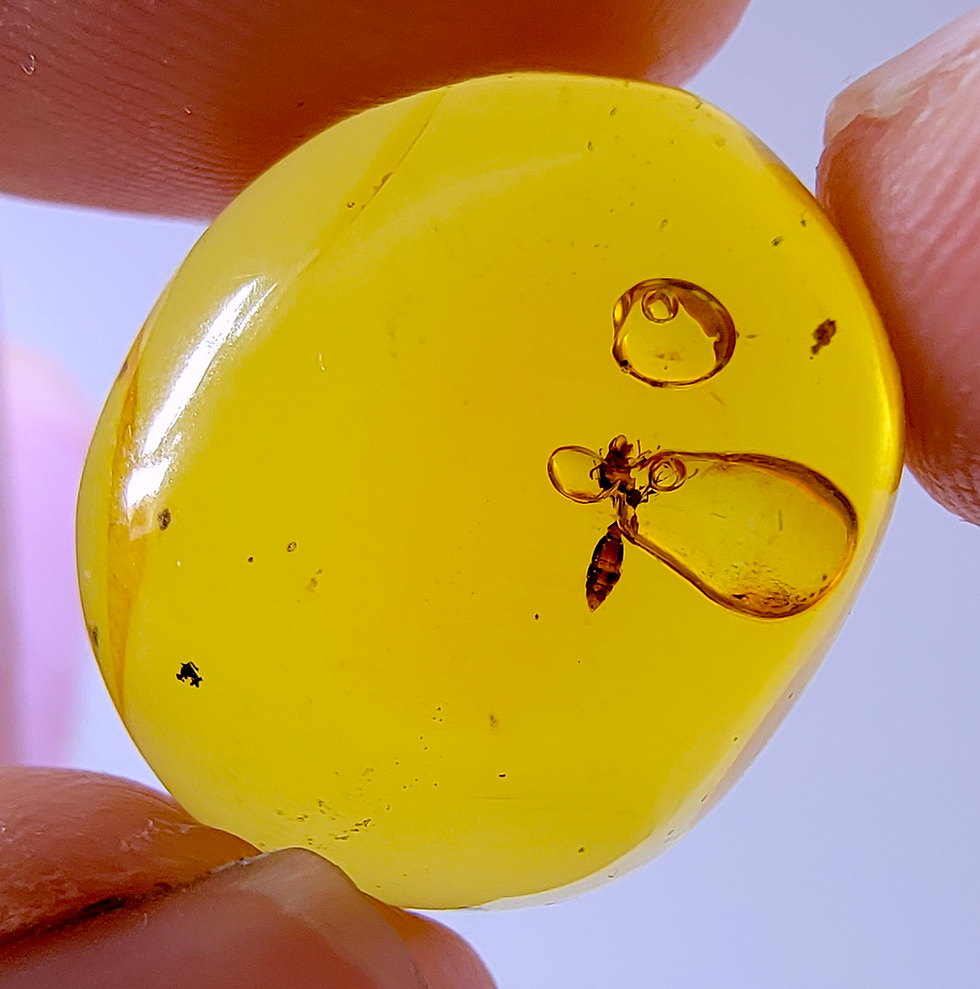

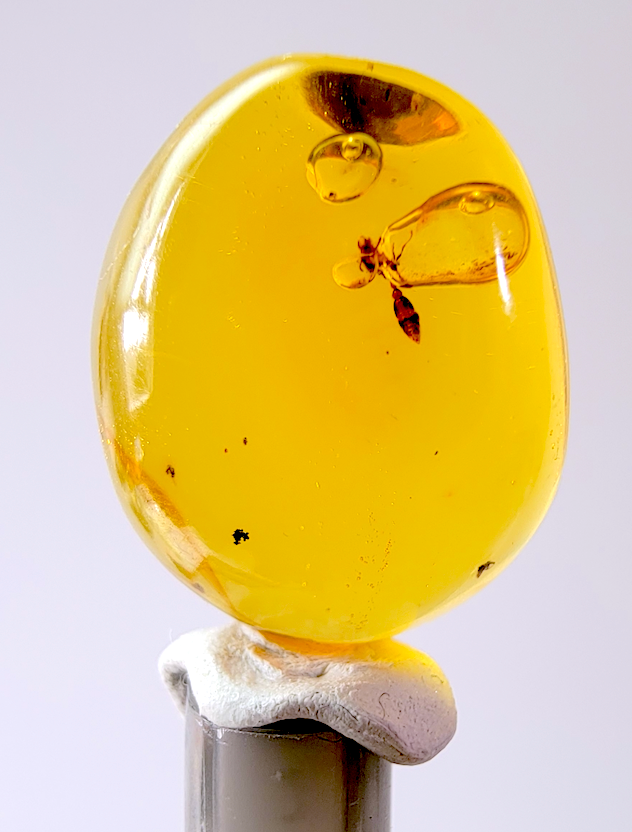

Inclusions: Fossilized wasp + two enhydro bubbles
Preservation: Clear body with segmented legs, wings, and antennae visible; enhydros are well-formed and refractive
Amber Type: Dominican amber
Age: Miocene epoch (~15–20 million years)
Locality: Cordillera Septentrional, Dominican Republic
Scientific Insight: This pairing allows researchers to examine insect morphology alongside amber’s role in trapping environmental moisture — a dual record of prehistoric life and atmosphere
Why Dominican Amber?
Dominican amber is one of the clearest ambers in the world, making it ideal for viewing inclusions in vivid detail. It fluoresces under UV light and often forms in shapes with natural polish. This amber is mined from fossil-rich layers of the Cordillera Septentrional and is known for:
Exceptional insect preservation
Common presence of enhydro bubbles
Light coloration and UV response
Its younger age compared to Cretaceous amber makes it ideal for studying more modern insect lineages, including early bees, ants, and wasps.
Where to Buy Fossils Like This
You can find Dominican amber with insect inclusions, enhydros, and unique combinations like this one at:


Comments