
The Scientific Value Of Insects In Amber

Updated: Mar 25
Are insects in amber valuable?
Once upon a time, strange creatures existed on earth. They are now extinct. Only their fossilized remains exist, in amber. Nowhere else. Without amber fossils, we would never know of their existence at all. Take the Hell Ant (Haidomyrmex) for example, which is only found in burmese amber. This ant has "hellish" verticle jaws, as opposed to modern day ants' horizontal jaws. Hell ants existed alongside the dinosaurs, but went extinct before humans appeared. Thus the only hell ants to be found today on earth exist in amber fossils from Myanmar.

Which insects in amber are the most valuable?
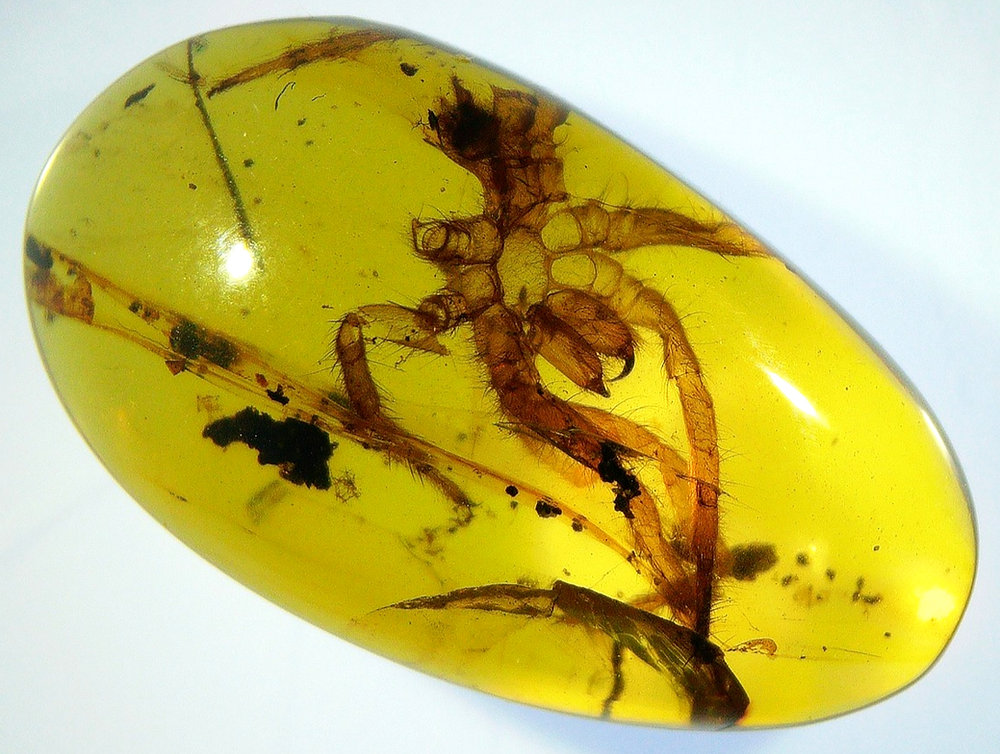
The value of insects in amber increases with their rarity. Rare species are more valuable, such as: Scorpions, lizards spiders, centipedes, lizards, feathers, pseudoscorpions, praying mantis', etc.
Common species carry much less value: Flies, beetles, cockroaches, ants.


What can amber tell us about the past?
Amber fossils can help us re-create prehistoric forests. We can know what insects existed in those forest (only the ones trapped in amber). Which insects were common, which were rare? Which plants dominated the forest? Which species were evolutionary ancestors of today's insects? Which insects no longer exist at all? Many questions like these, and more, are all answered by studying amber fossils.
Evolutionary records are greatly improved by insect fossils. Amber fossils far outnumber most other kind of fossils. We we are able to construct thorough fossil records of insect lineages thanks to amber.
Dominican amber, which is from the island of Hispanoila, provides a snapshot of evolution on an island. Which means many species are contained, and more specialized. Burmese amber on the other hand is from a continental deposit, therefore shows a different range of evolution.
Insects trapped in amber can provide information about the morphology and anatomy of ancient insects, including details about their body structures, wings, and other features. This information can help scientists to understand how insects have evolved over time and how they have adapted to different environments.
Overall, the scientific value of insects in amber provides a unique and valuable source of information about the biology, behavior, and evolution of ancient insects. It is an important resource for scientists, and continues to provide valuable insights into the natural world of the past.




Comments